GlutenTrace for iPhone

A gluten free barcode scanner that shows its work

Scan a product barcode and get a straight answer about gluten - including the voluntary "may contain traces" warnings other apps bury or skip. When the app does not know, it says so.

Coming soon to the App Store

Free to use. No account. No ads.

The GlutenTrace start screen with a button for scanning a barcode
A GlutenTrace barcode result showing a red Contains gluten verdict for a Dr. Oetker pizza

How scanning a barcode works

Point the camera at the barcode

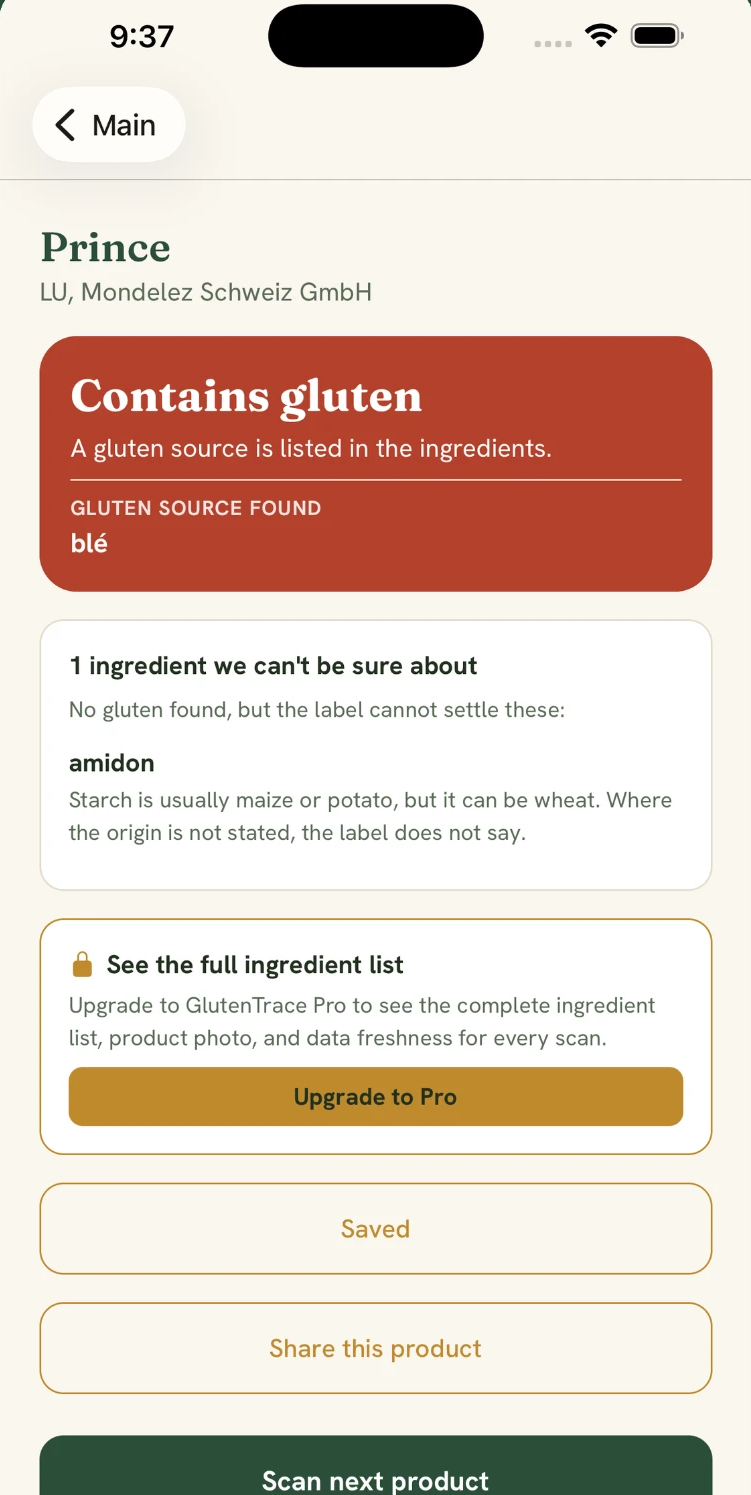
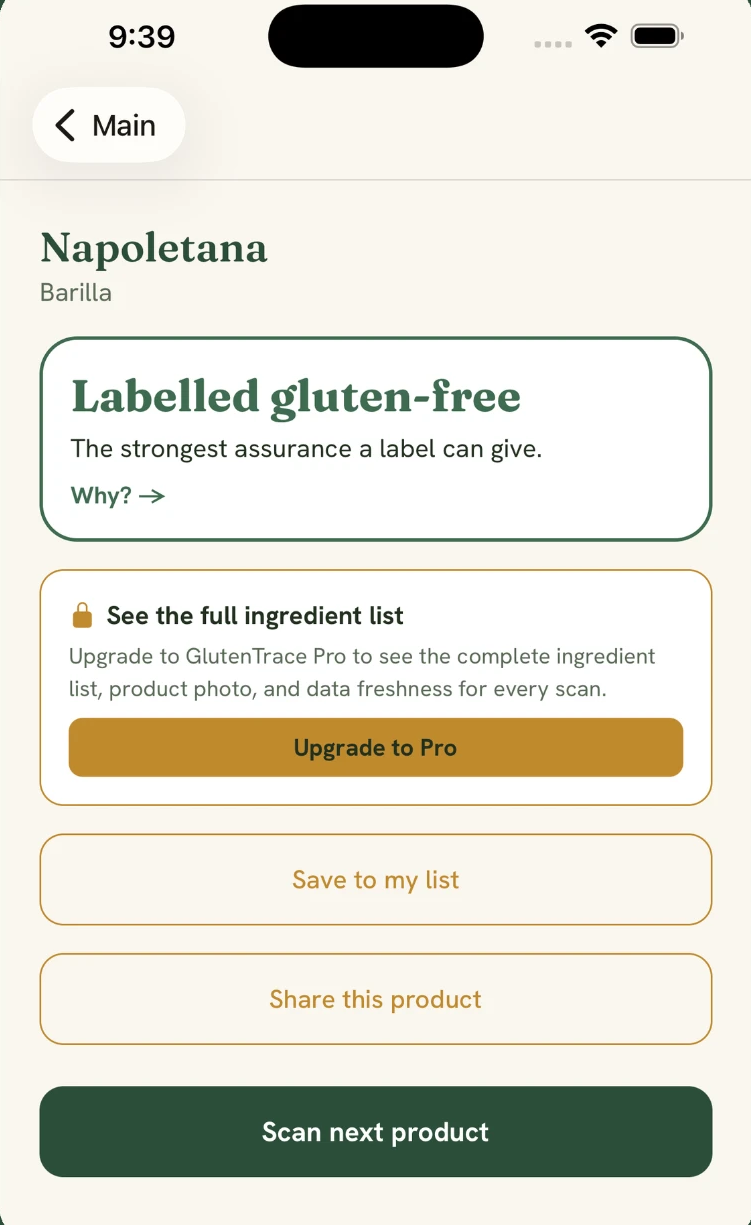
The app looks the product up and shows whether it contains gluten, may contain traces, or carries a regulated gluten-free claim.
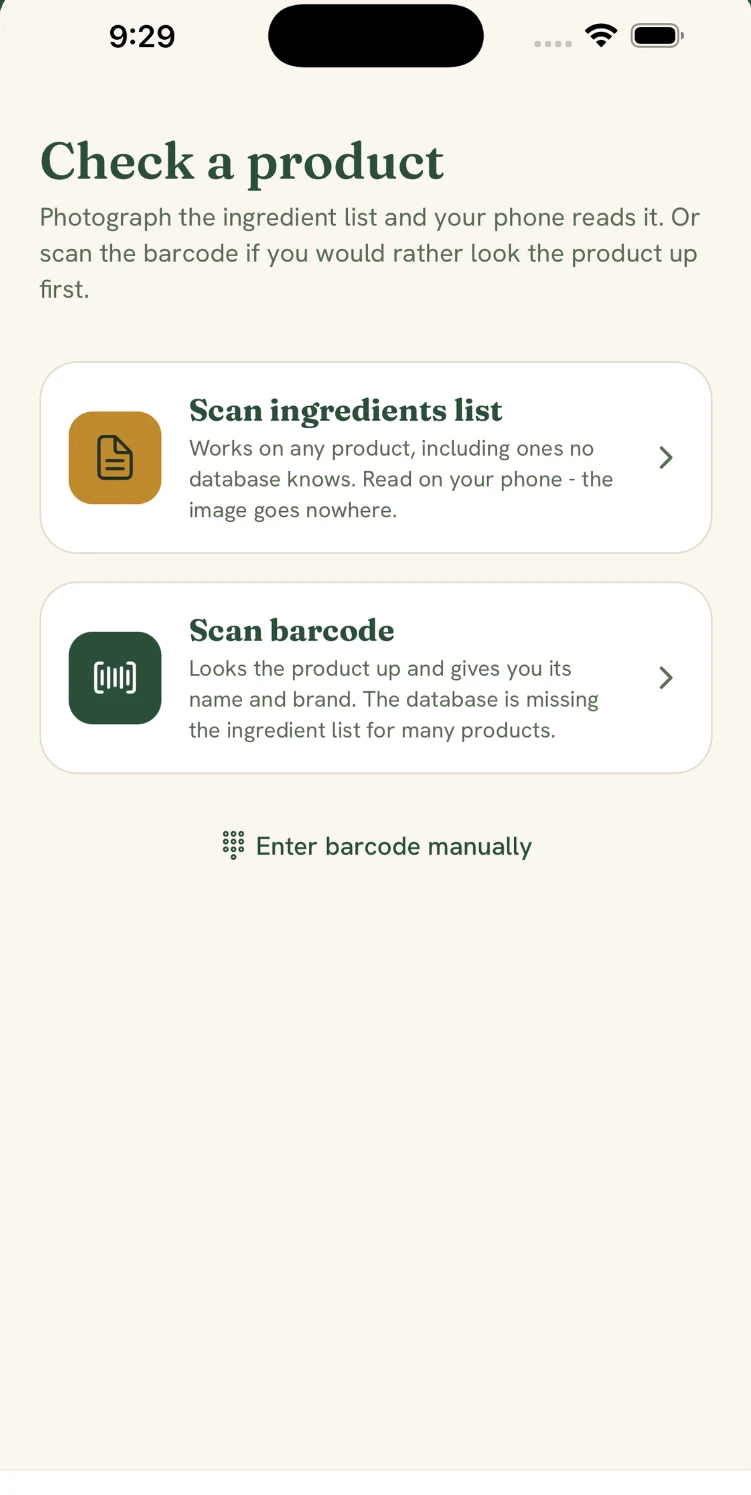
The GlutenTrace check-a-product screen with buttons for scanning a barcode or an ingredients list

Read the verdict, and the reason for it

The gluten source is marked in the ingredient list, so you can see why the answer is what it is - in ten languages, including the German and Italian labels that turn up in European shops.

A GlutenTrace result screen showing a red Contains gluten verdict with WEIZENMEHL marked in the ingredient list

Not in the database? Scan the label instead

Photograph the ingredients list and your phone reads it on the device. Nothing leaves your phone to do it, and when the reading is inconclusive the app says so instead of guessing.
A GlutenTrace result reading "Nothing found in what we read" after reading a label photo

The "may contain traces" difference

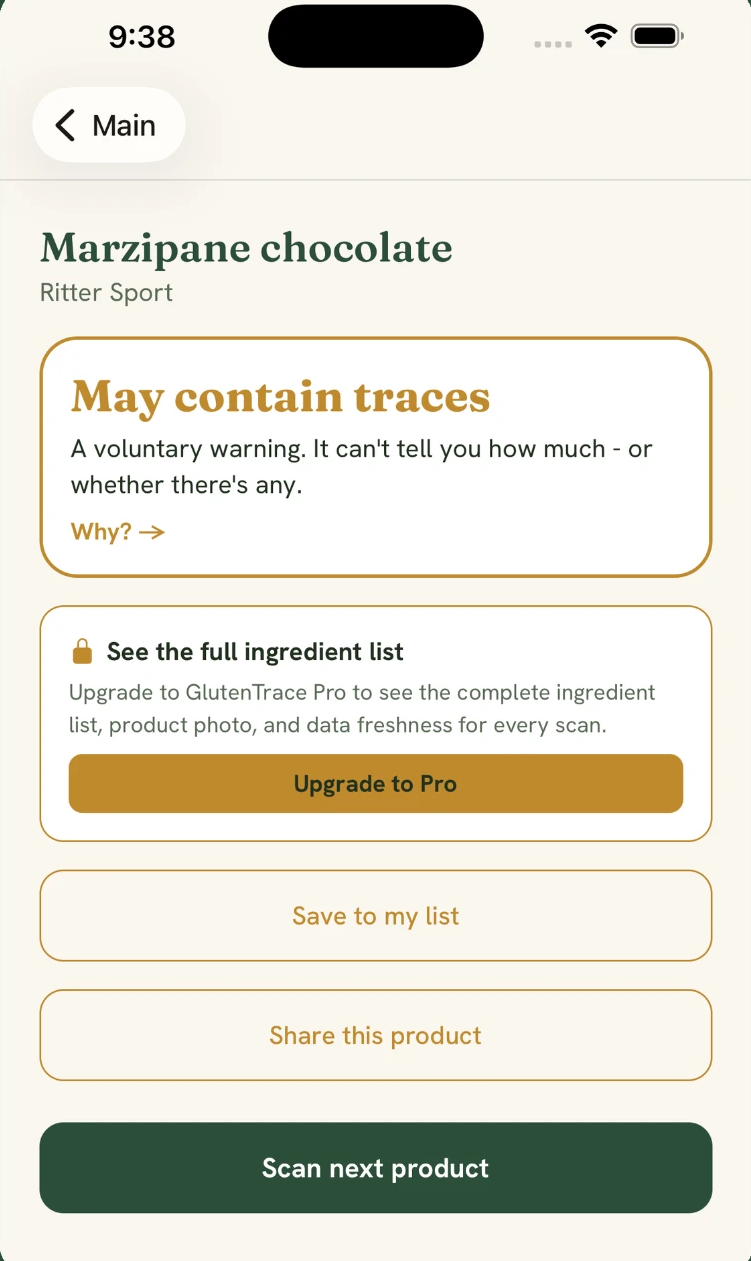
A voluntary "may contain traces of gluten" line is not a measurement, and it is not regulated the way a gluten-free claim is. Most scanner apps either hide it behind a green checkmark or drop it entirely. GlutenTrace shows the warning, shows the ingredient it found, and tells you how old the data behind the answer is - so the judgement stays yours.

(Celiac disease is spelled "coeliac" outside the US - same condition.)
Read what "may contain traces" actually means

What the free scanner includes

  • Unlimited barcode scans
  • The safety verdict, with the reasoning behind it
  • Which ingredient is the gluten source
  • Reading the ingredients list on the device when a product is missing
  • Submitting missing products to the database

Where the barcode data comes from

Product data comes from Open Food Facts, an open, community-maintained database, used under the Open Database License. Product photos are used under CC BY-SA. Ingredient lists change and databases lag behind - so the app tells you how old its information is, and when a product is missing you can read the label yourself with the ingredient scanner.

openfoodfacts.org

An ingredient list where the German word WEIZENMEHL is marked in red as the gluten source

See everything GlutenTrace does